You are not using a standards-compliant web browser. This site looks strikingly better if you use a standards-compliant web browser. However, this site is still functional with your browser.
This is a short list of standards-complaint browsers that will make your visit to this site a more pleasurable one: Mozilla Firefox, Netscape 7, Opera 6 or greater, or Internet Explorer 5 or greater.

April 10-12, 2012
Navigating the American Carbon World
San Francisco,
California
http://nacw2012.com/
News, Research, and Information
Climate
Impacts on Agriculture: Implications for Crop Production
November 10, 2011
A new review article in Agronomy Journal focused on the impact of temperature, CO2, and ozone on agronomic crops.
New Reports Explore Greenhouse Gas
Mitigation in U.S. Agriculture
November 10, 2011
Two new reports from the Nicholas Institute at Duke University explore greenhouse gas mitigation opportunities in agriculture.
Evaluating Long-Term
Impacts of Harvesting Crop Residue on Soil Quality
February 22, 2011
A literature review of the effects of harvesting crop residue on soil carbon and other quality parameters.
Atmospheric CO2:
Principal Control Knob of Earth's Temperature
October 26, 2010
NASA scientists explain the powerful effects CO2 has on the Earth's temperature.
Effects of One-time Tillage on
Soil Properties in No-till Cropland
October 26, 2010
University of Nebraska research examines the effects of a one-time tillage operation on soil organic carbon and other soil properties.
Key Global Warming Indicators:
NOAA Report
September 8, 2010
All indicators point to the reality of global warming, according to a recent NOAA report.
Greenhouse Gas Calculator for
Farming Systems
September 8, 2010
A Greenhouse Gas Calculator for farming systems has been developed.
Grazing Management
Contributions to Net Global Warming
September 8, 2010
A study determined the net Global Warming Potential of three grazing management systems in the northern Great Plains.
Enhanced-Efficiency Fertilizers As Mitigation Options for N2O
July 2, 2010
Nitrification inhibitors significantly reduced N2O emissions compared with those of conventional fertilizers.
High-Yield Agriculture
Slows Pace of Global Warming
July 2, 2010
If not for increased yields, additional greenhouse gas emissions from clearing land for farming would have been equal to as much as a third of the world's total output of greenhouse gases since the dawn of the Industrial Revolution in 1850.
Strong Evidence on Climate Change:
National Research Council Reports
May 25, 2010
The National Research Council has recently issued three reports on climate change, and what actions the U.S. should consider in light of these findings.
Soils Emitting More
Carbon Dioxide
March 26, 2010
Soils around the globe have increased their emissions of carbon dioxide over the past few decades, according to an analysis of 439 studies.
Microorganisms Cited as Missing
Factor in Climate Change Equation
January 29, 2010
Those seeking to understand and predict climate change can now use an additional tool to calculate carbon dioxide exchanges on land.
2009 Global Temperatures: Year Tied
for Second Hottest
January 29, 2010
Scientists at NASA’s Goddard Institute for Space Science found that 2009 was tied as the second hottest year ever recorded.
New USDA Report on Impact of
Climate Change on Agriculture
December 23, 2009
Based on a consensus of recent scientific research and modeling, a new report from USDA concludes that climate change is already affecting U.S. agriculture, land resources, water resources and biodiversity.
Main Greenhouse Gases Reach
Highest Level Since Pre-Industrial Times
December 23, 2009
Levels of greenhouse gases continue to increase, according to the World Meteorological Organization.
Effect of Different
Nitrogen Fertilizer Sources and Soils on Nitrous Oxide Emissions
December 23, 2009
USDA-ARS scientists are conducting research into how different nitrogen fertilizers and soils affect nitrous oxide emissions.
Grant Funds Technical Working
Group on Agricultural Greenhouse Gases (T-AGG)
October 20, 2009
The Nicholas Institute, working together with Duke University and Kansas State University colleagues, will coordinate and complete a transparent and scientifically founded review of GHG mitigation opportunities in the U.S. and abroad. This project, titled the Technical Working Group on Agricultural Greenhouse Gases (T-AGG), is funded by a Packard Foundation grant.
Economic Analysis of
Cap-and-Trade Legislation's Impact on Agriculture
September 4, 2009
A brief summary of the various economic analyses that have been done on the Waxman-Markey House cap-and-trade legislation.
Nitrous Oxide and Methane Emissions
from Continuous Corn Cropping System
June 11, 2009
Research at The Ohio State University examines the effect of a tillage on nitrous oxide and methane emissions in a continuous corn cropping system.
Carbon Sequestration in a
Semi-Arid Soil in Spain
June 11, 2009
Research from a university in Spain examines the effect of a tillage on carbon sequestration rates in a semi-arid environment.
Effect of Single Tillage
Operation on Carbon Sequestration in No-Till Cropping System
April 24, 2009
Research at K-State examines the effect of a single low-intensity tillage operation on carbon sequestration in a no-till system.
Science Podcast on the Role of Soils in Climate Change
April 16, 2009
An interview with Chuck Rice, Professor of Agronomy, Kansas State University on the role of soils in climate change. Released to radio stations around the world during the week of April 13-17 as a global science podcast from the EarthSky network.
Economics of Soil
Carbon Sequestration
March 20, 2009
How the economics of soil carbon sequestration relate to other methods of sequestering carbon. Briefing by John Antle, Professor of Agricultural Economics and Economics, Montana State University, to the U.S. Senate Agriculture Committee on March 20, 2009.
Agriculture's
Opportunity in Mitigating Greenhouse Gases
March 20, 2009
How agriculture can play a role in mitigating greenhouse gases. Briefing by Chuck Rice, Professor of Agronomy, Kansas State University, to the U.S. Senate Agriculture Committee on March 20, 2009.
Methods for Measuring and
Monitoring Soil Carbon Sequestration
March 20, 2009
An explanation of the current status of the technologies for measuring and monitoring soil carbon levels. Briefing by Cesar Izaurralde, Pacific Northwest National Laboratory and Joint Global Change Research Institute, to the U.S. Senate Agriculture Committee on March 20, 2009.
Projected Effect of Climate Change
on Agriculture
December 2, 2008
Climate change is projected to have a significant effect on agricultural production.
Climate Change Projections for
Kansas
December 2, 2008
The climate in Kansas is projected become warmer overall and precipitation more variable, with significant differences between eastern and western Kansas.
Climate Change Expert Supports
Agriculture's Role in Reducing CO2
December 2, 2008
Dr. James Hansen, director of NASA's Goddard Institute for Space Studies, spoke at the 2008 Kansas Wind and Renewable Energy Conference. He outlined the most recent findings on climate change, and his recommendations for immediate action.
What Are Climate Feedbacks?
December 2, 2008
Feedback mechanisms are an important aspect of climate change, but little understood by the public.
The "Tipping Point" in Climate
Change
December 2, 2008
Dr. James Hansen, director of NASA's Goddard Institute for Space Studies, spoke at the 2008 Kansas Wind and Renewable Energy Conference. He explained the dangers of reaching the "Tipping Point" in climate change.
Global Climate
Change Symposium
November 21, 2008
National and state leaders in climate change research and policy recently spoke at a special symposium at Kansas State University. Presentations are posted here.
Regional Cap-and-Trade
Programs in US and Canada Beginning to Take Action
October 9, 2008
There are three regional cap-and-trade programs that have formed recently in the U.S. and Canada. They are beginning to take action already.
Mitigation of
Climate Change
October 8, 2008
There is substantial economic potential for the mitigation of global greenhouse gas emissions over the coming decades, that could reduce or offset the projected growth of global emissions, according to the IPCC Fourth Assessment Report. A presentation by K-State's Chuck Rice at the Association of Ecosystem Research Centers on Sept. 25, 2008.
Carbon
Sequestration in Agro-Ecosystems
October 8, 2008
Agriculture offers many potential opportunities to sequester carbon and mitigate greenhouse gas emissions. A presentation by K-State's Chuck Rice at the 2008 Kansas Wind and Renewable Energy Conference on Sept. 23, 2008.
Smithsonian Soil Exhibit Now
Open
September 19, 2008
A newly opened exhibit on soils at the Smithsonian National Museum of Natural History.
Cap-and-Trade: Getting the Most
Greenhouse Gas Reductions for the Money
August 8, 2008
The advantages of a cap-and-trade system for greenhouse gas reductions.
Methane Emissions Calculator
May 22, 2008
Try out this prototype online calculator of methane emissions from livestock.
America's Climate
Security Act
April 16, 2008
Main aspects of one of the primary climate change acts introduced in the U.S. Senate.
Proposed Elements of a
Mandatory National Greenhouse Gas Registry
April 16, 2008
In any manadatory greenhouse gas reduction policy, establishing an effective registry is critical.
Climate Impact of Starch-Based vs.
Cellulosic Bioethanol
March 20, 2008
Whether any particular biofuel can reduce greenhouse gases depends on many factors.
COMET-VR: USDA's Voluntary
Reporting Carbon Management Tool
March 20, 2008
COMET-VR is a web-based decision support tool for agricultural producers, land managers, soil scientists, and other agricultural interests.
The Physical Basis of Climate
Change: IPCC Working Group I
February 20, 2008
A brief summary of the findings of the United Nations Intergovernmental Panel on Climate Change (IPCC) Working Group I, from its Fourth Assessment Report.
Impacts, Adaptation, and
Vulnerability to Climate Change: IPCC Working Group II
February 20, 2008
A brief summary of the findings of the United Nations Intergovernmental Panel on Climate Change (IPCC) Working Group II, from its Fourth Assessment Report.
Mitigation of Climate Change:
IPCC Working Group III
February 20, 2008
A brief summary of the findings of the United Nations Intergovernmental Panel on Climate Change (IPCC) Working Group III, from its Fourth Assessment Report.
Report on CASMGS Forum: Agriculture's Role in the New
Carbon Economy
December 19, 2007
The 2007 CASMGS Forum at Kansas State University was a great success. Speakers discussed a wide range of topics, from soil carbon measuring techniques to carbon markets, cap-and-trade legislation, cellulosic biofuel production, and climate change projections. PowerPoint presentations from the forum are now available. Conference presentations.
Fourth IPCC Synthesis Report
Summary
Dec. 14, 2007
The U.N.'s Intergovernmental Panel on Climate Change (IPCC) has issued its Fourth Report. A summary of the synthesis report reveals the most important conclusions.
LIBS: A Rapid New Method for
Measuring Soil Carbon
Dec. 14, 2007
A new rapid method of measuring soil carbon called LIBS (Laser Induced Breakdown Spectroscopy) has been developed by scientists at the Los Alamos National Lab, and is being field tested at Kansas State University.
Developing Models for N2O
Emissions
Nov. 30, 2007
Computer Decision Support System tools can model the predicted impact of land management practices on N2O emissions.
The Role of Agriculture in N2O
Emissions
Nov. 30, 2007
How and why does agriculture contribute to greenhouse gas emissions of N2O, and how can these emissions be reduced?
Measuring Soil Carbon Rapidly with NIR
Technology
Nov. 30, 2007
One of the challenges of soil carbon measurement is being able to take readings rapidly. NIR technology is making progress in this respect.
New Signup Period for
Carbon Credit Program
Nov. 16, 2007
The carbon credit pilot project from the Chicago Climate Exchange has a new signup period that extends until September, 2008.
Climate Change Work Honored with
Nobel Peace Prize
Nov. 16, 2007
The UN Intergovernmental Panel on Climate Change (IPCC), along with former Vice President Al Gore, received the Nobel Peace Prize in 2007. CASMGS investigators have played a significant role in the IPCC.
The Impact of Demands
for Energy and Environmental Services on Kansas Agriculture
Nov. 7, 2007
Chuck Rice, professor of Agronomy at K-State, explains how climate change and biofuel demands will affect agriculture in Kansas. See the complete presentation here.
Environmental Impact of Climate Change on Kansas
Oct. 27, 2007
A University of Kansas Professor of Geography discusses the many ways that climate change may impact Kansas in the future. See the complete presentation here.
Carbon Markets Overview
September 18, 2007
There are several types of carbon markets operating throughout the world, and the differences may be confusing. The markets can be divided into two basic types: Compliance Markets and Voluntary Markets. Read a full discussion of these markets here.
Renewable Energy and
Greenhouse Gas Emissions
March 23, 2007
Renewable energy production and use (ethanol, butanol, and biodiesel) reduces greenhouse gas emissions compared to fossil fuel production and use. Some types of renewable energy crops have a much greater effect than others.
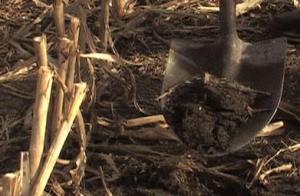
Watch Video on Agricultural Soil Carbon Sequestration Basics
Chuck Rice, director of CASMGS and professor of agronomy at Kansas State University, explains the basics of agricultural soil carbon sequestration in this short video clip.
Soil Carbon and Climate Change News
Read the latest issue of Soil Carbon and Climate Change News here. You'll also find all past issues of this newsletter.
Conference Proceedings: 2007 USDA Greenhouse Gas Symposium
February 6-8, 2007
Past Conference Proceedings: 2005 USDA Greenhouse Gas Symposium
March 21 - 24, 2005
Past Conference Proceedings: CASMGS 2003 Fall Forum
Conference information, presentations, and papers are available at http://www.oznet.ksu.edu/ctec/Fall_Forum.htm
Carbon Calculator
Calculate land area, carbon or CO2, and monetary value.
Enter any value and the other two will automatically calculate.
To recalculate, enter a value in any of the three fields
Convert between units of land area, amount of carbon area, or monetary values.
Change the assumptions and click update.